Technical articles
Written by the engineers who specify and make the pipe, for the people who have to choose it. Each piece is dated and signed.

Inspecting HDPE Pipe Before You Pay For It
Third-party inspection agencies publish generic checklists — count the cartons, check the labels, photograph the loading. They are written to cover any product, so they miss everything specific to polyethylene pipe. Here is what we would look for if we were buying from us.
Zhou Min · 11 min read

Which Pipe to Order for a Directional Drill
The literature on directional drilling is written for the driller: how to model pullback force, how to plan a bore path. Useful, and not your problem. Your problem comes earlier — the pipe has to be bought, and bought right, before anyone pulls anything.
Sun Qiang · 9 min read
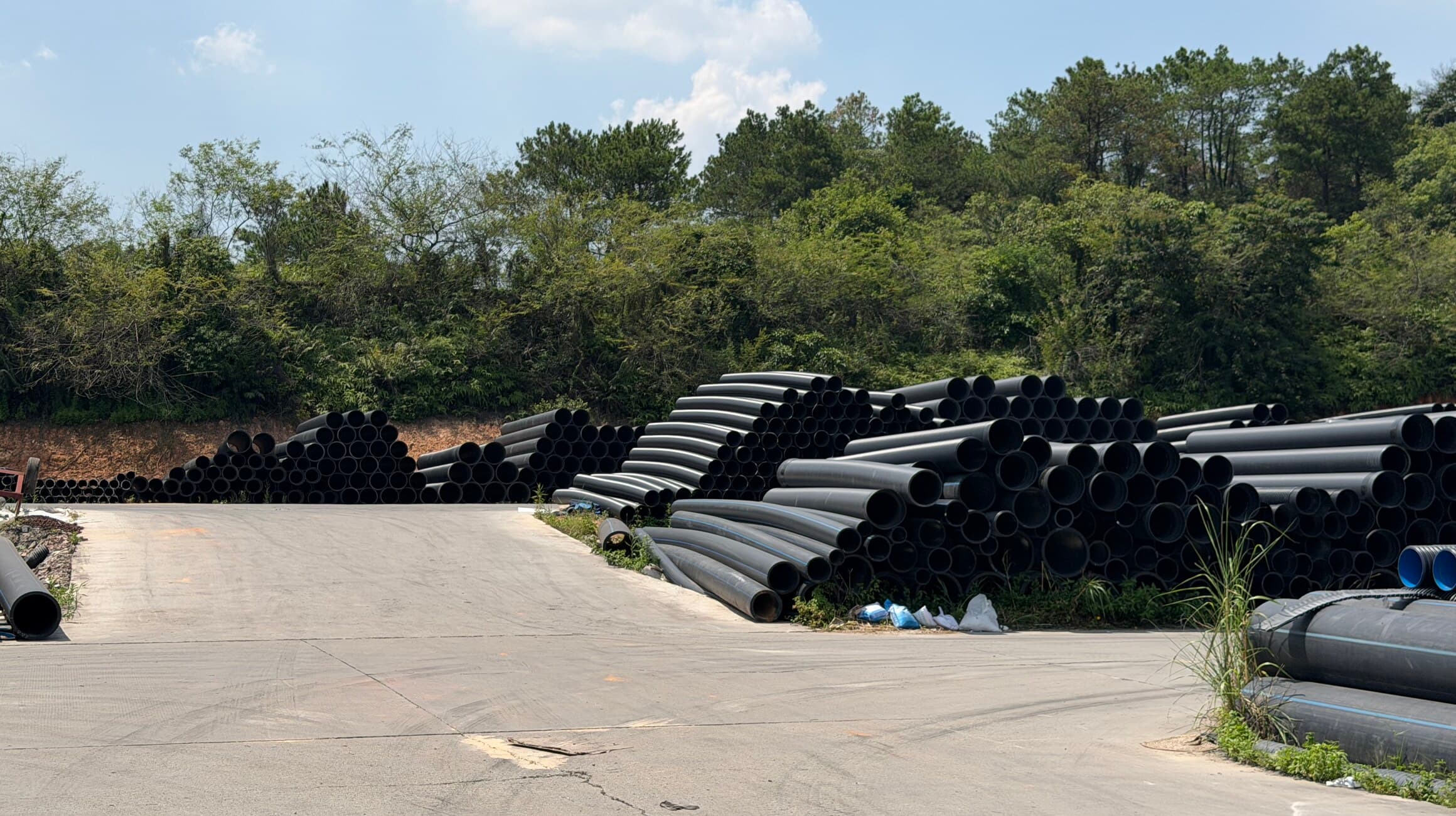
SN Is a Stiffness, Not a Strength — and the Soil Does Most of the Work
Search for how to pick a ring stiffness class and you will find a table: SN4 to one metre, SN8 to three, SN16 below that. The tables disagree with each other, and all of them leave out the thing that matters most — how well the trench was backfilled.
Wang Lei · 10 min read

SDR and Pressure Rating, in Metric and Imperial
One ratio decides what a polyethylene pipe can hold. The trouble is that half the world expresses the answer in bar and the other half in psi, from two different formulas, and a tender written in one convention is routinely quoted in the other.
Zhang Wei · 11 min read

Butt Fusion or Electrofusion: A Decision, Not a Preference
Every article on this subject ends with "it depends on your project". That is true and useless. The dependency is short, and it can be written down: four questions decide it, and only one of them is about the pipe.
Li Jun · 9 min read
HDPE, Ductile Iron or PVC: An Honest Comparison from a Pipe Maker
Almost everything written on this comparison is published by someone who sells one of the three. This page is no exception — we extrude polyethylene. So rather than ask you to trust the conclusion, this sets out where each material actually wins, including the two arguments against our own product that we think are correct.
Chen Hao · 13 min read
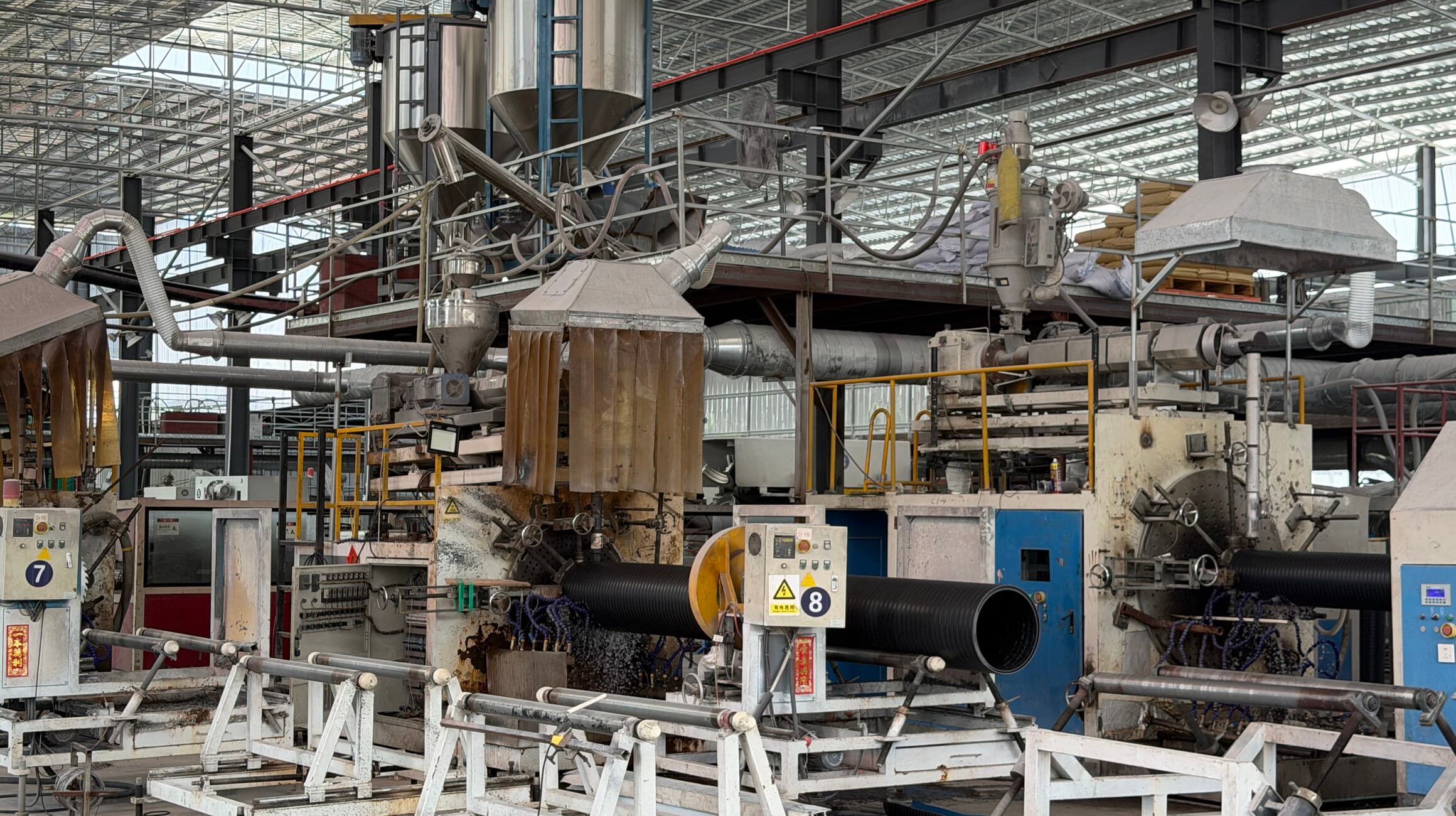
How HDPE Pipe Is Made: From Compound to Crate, Step by Step
Every HDPE pipe factory runs the same nine steps. What separates them is which of those steps they control and which they hope for. This is the line as it actually runs, with the point at each stage where a good pipe and a bad one part ways.
Zhang Wei · 11 min read
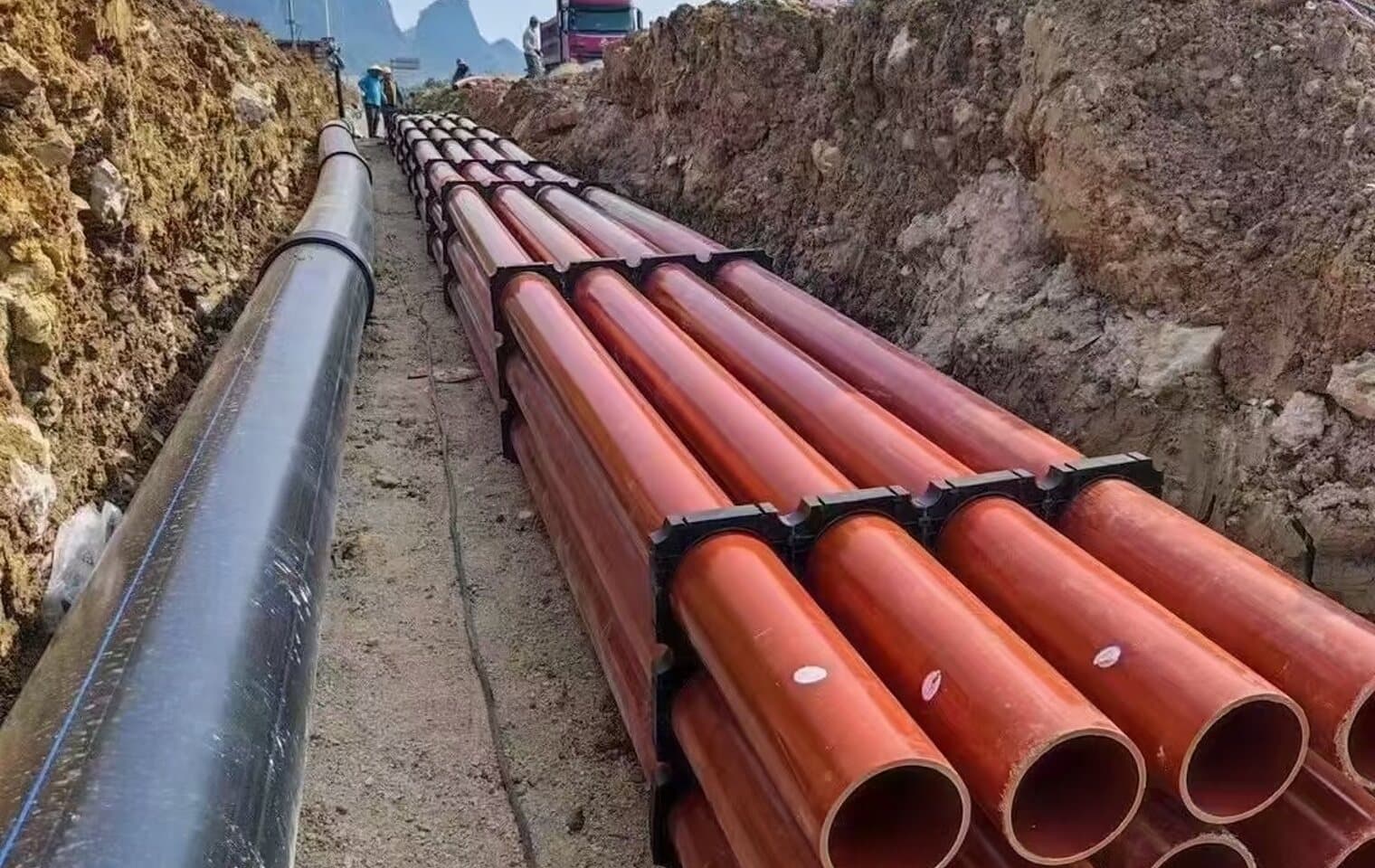
Trench, Bedding and Backfill for HDPE Pipe: The Soil Is Half the Structure
A rigid pipe carries the load in its wall. A polyethylene pipe carries it by leaning on the soil around it, which means the crew placing the backfill is finishing the design. Here is what they need to do, in the order they need to do it, with the numbers.
Li Jun · 12 min read
PE80 vs PE100: What the Number Changes, and What It Does Not
PE100 is not a better version of PE80 in every respect, and PE80 is not obsolete. They are two strength classes of the same polymer, and the difference is exactly one number — 8 MPa against 10 MPa — from which everything else follows. This article follows it.
Zhang Wei · 9 min read

HDPE pipe fittings: every type, how it joins, and where each belongs
A PE pipeline is a few kilometres of pipe and a few hundred fittings, and it is the fittings that decide whether it can be built, repaired and connected to anything made of metal. This guide covers each family with the numbers a specifier needs: size ranges, pressure factors, bolt patterns, and where each one is the wrong answer.
Li Jun · 12 min read

Shipping HDPE pipe by container: what a 40-foot box really holds
Polyethylene pipe fills a container by volume long before it reaches the weight limit, so the price per metre landed at your port depends on how the box is packed as much as on the price per tonne. Here are the numbers by diameter, the nesting chains that change them, and the paperwork that has to travel in the door pocket.
Zhou Min · 11 min read
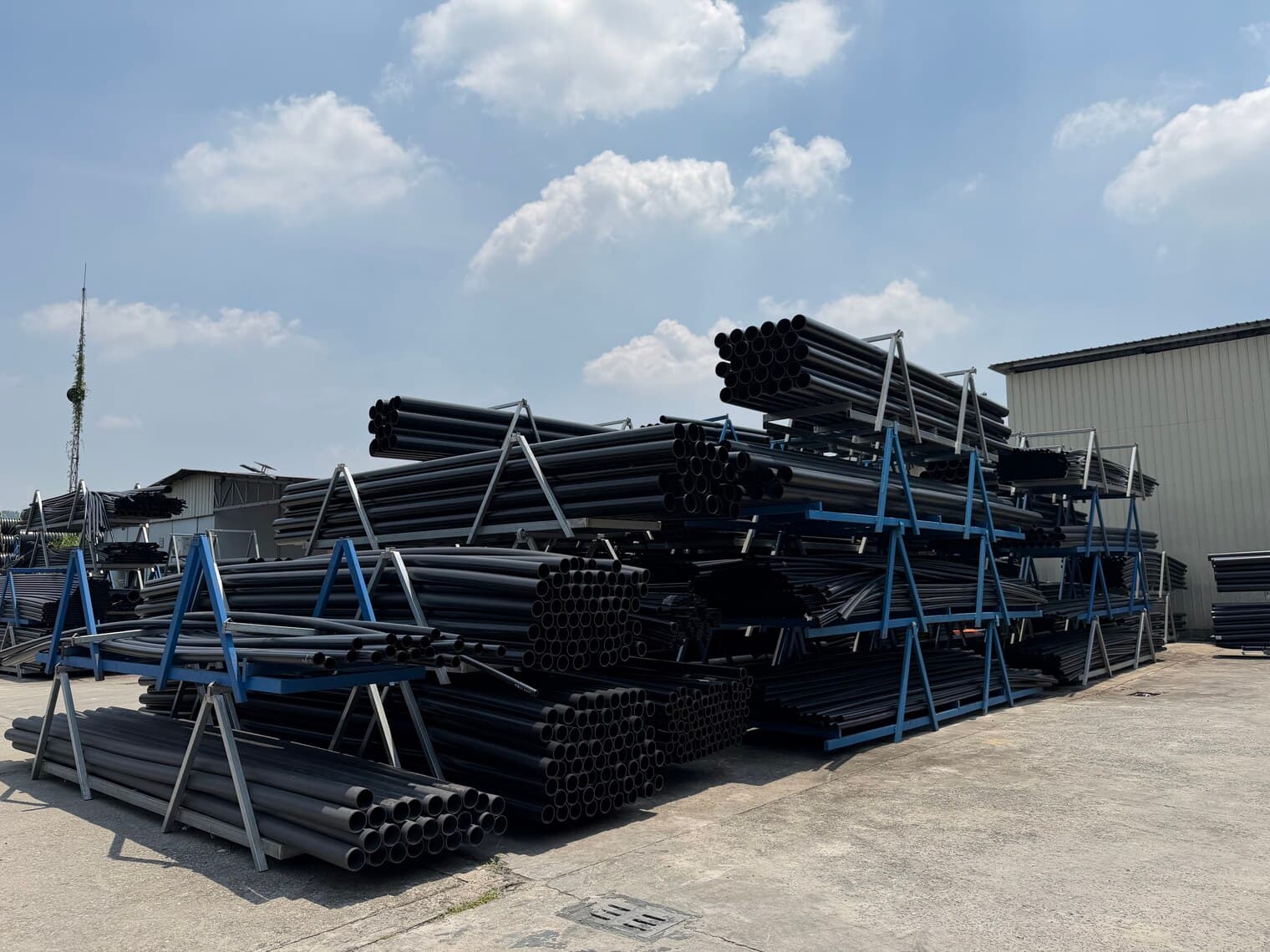
How long HDPE pipe lasts: what 50 years means, and why 100 is the realistic number
Every PE100 datasheet says 50 years. Every trade body says 100. Both are right, because they are answering different questions: the first is the condition under which the material's strength was certified, the second is what buried pipe has actually done. This article puts both on the same graph and then lists what moves a real pipeline from one number to the other.
Zhang Wei · 11 min read
Need a quote or a spec check?
Send us your drawing, tender document or bill of quantities. Our engineers reply within 12 working hours with pricing, lead time and a container loading plan.