
DN500 dredging pipe with flanged ends stacked in rows under the shed roof

HDPE Pipe

Dredging & Marine Pipe

Floating dredge lines, outfalls and seawater intakes, engineered and fabricated as complete systems.

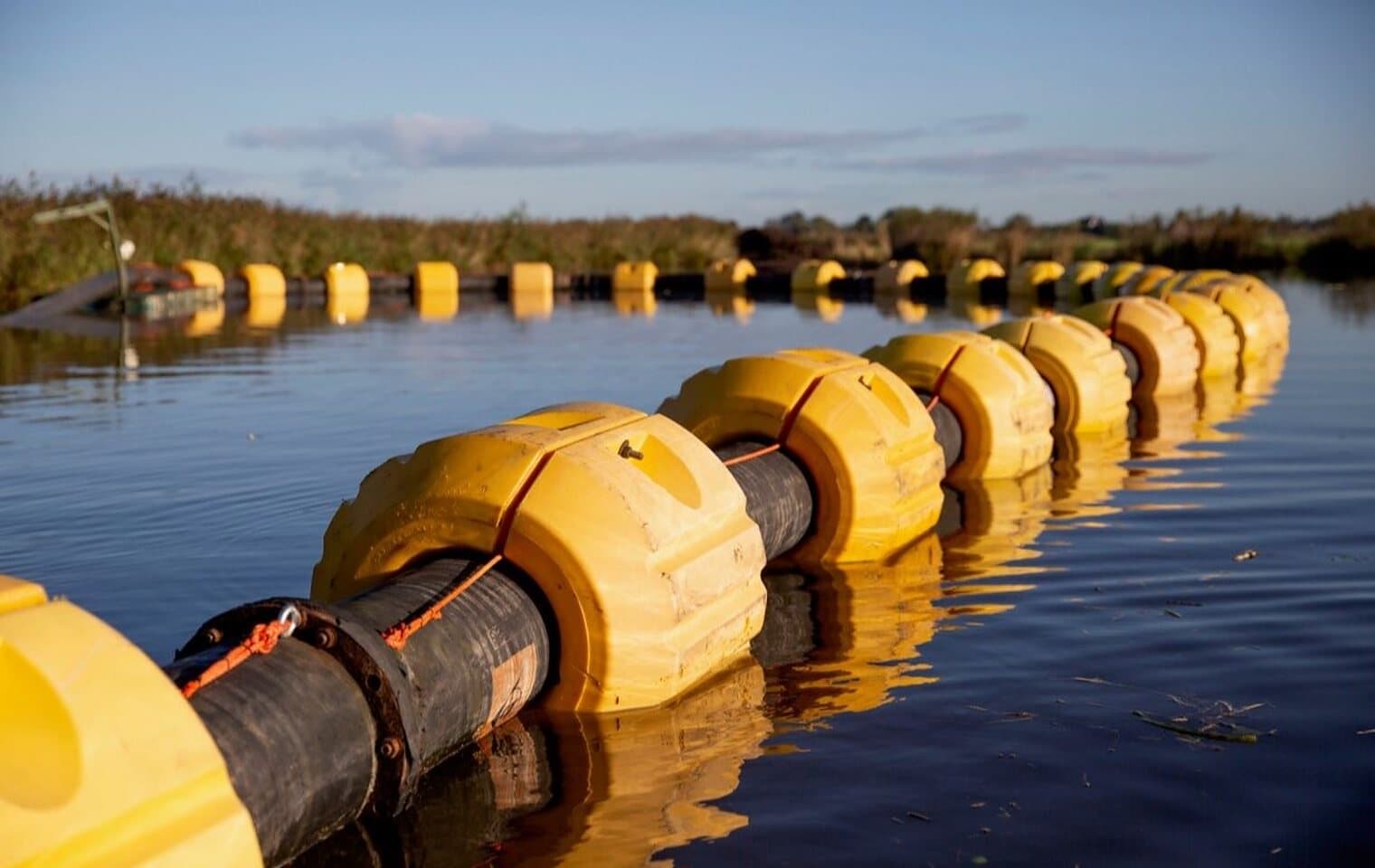
A dredging line afloat on the water, carried by clamped yellow pontoons

Marine work is a system problem, not a pipe problem. We supply heavy-wall HDPE dredging pipe with flanged spool ends, matched floaters, ballast weights and marine-grade hardware, engineered together so the line behaves predictably in current and swell.

For outfalls and intakes we fabricate sinker pipe with concrete ballast collars, diffuser sections and buoyancy calculations submitted for the contractor's marine method statement. Pipe is pressure-tested and marked before shipment so offshore assembly stays on the critical path for the shortest possible time.

Key features

  • Heavy-wall dredge pipe DN200–DN1200 with flanged spool ends
  • Floaters, ballast collars and marine-grade bolting supplied as a set
  • Buoyancy and ballast calculations for the marine method statement
  • Diffuser fabrication for outfall projects
  • Factory pressure testing and spool marking before shipment

Specifications

Dredging & Marine Pipe technical specifications
Diameter rangeDN200 – DN1200
SDRSDR 11 – SDR 17 typical
Spool endsStub end + backing ring, or fixed flange
AccessoriesFloaters, ballast collars, chains, shackles
Typical dutyDredging, outfalls, seawater intakes, brine lines

Frequently asked questions

Do you supply the floaters and ballast as well?
Yes, and we would rather supply them together. Pipe, floaters, ballast collars and marine hardware have to be sized as one system — a floater set matched to the wrong wall thickness will sit the line at the wrong freeboard. Buying them from separate suppliers is where marine jobs usually go wrong.
Can you provide buoyancy calculations?
Yes. We issue buoyancy and ballast calculations for the supplied configuration so the contractor can put them into the marine method statement. They are calculations for our scope, not a substitute for the project's own marine engineering.
Why flanged spools instead of one fused string?
Because dredge lines get reconfigured. A flanged line can be lengthened, shortened or have a worn section swapped in a single shift; a fused string needs a machine and a weather window. Outfalls and intakes are the opposite case — those are usually fused, because nobody wants a mechanical joint on the seabed.

Need a quote or a spec check?

Send us your drawing, tender document or bill of quantities. Our engineers reply within 12 working hours with pricing, lead time and a container loading plan.